

Combining NSW LRS portals into one seamless experience
Consolidated two separate professional portals into a single unified platform, using card sorting research with 40+ participants to define an information architecture that matched how users actually think about the services.
Role
Lead UX Designer
Team
Collaborated with UX Designer, Solution Architect, Business Analyst, Tech Lead
Timeline
6 weeks (3 weeks discovery, 3 weeks design)
Tools
Figma, Miro, Optimal Workshop, Gemini
The challenge
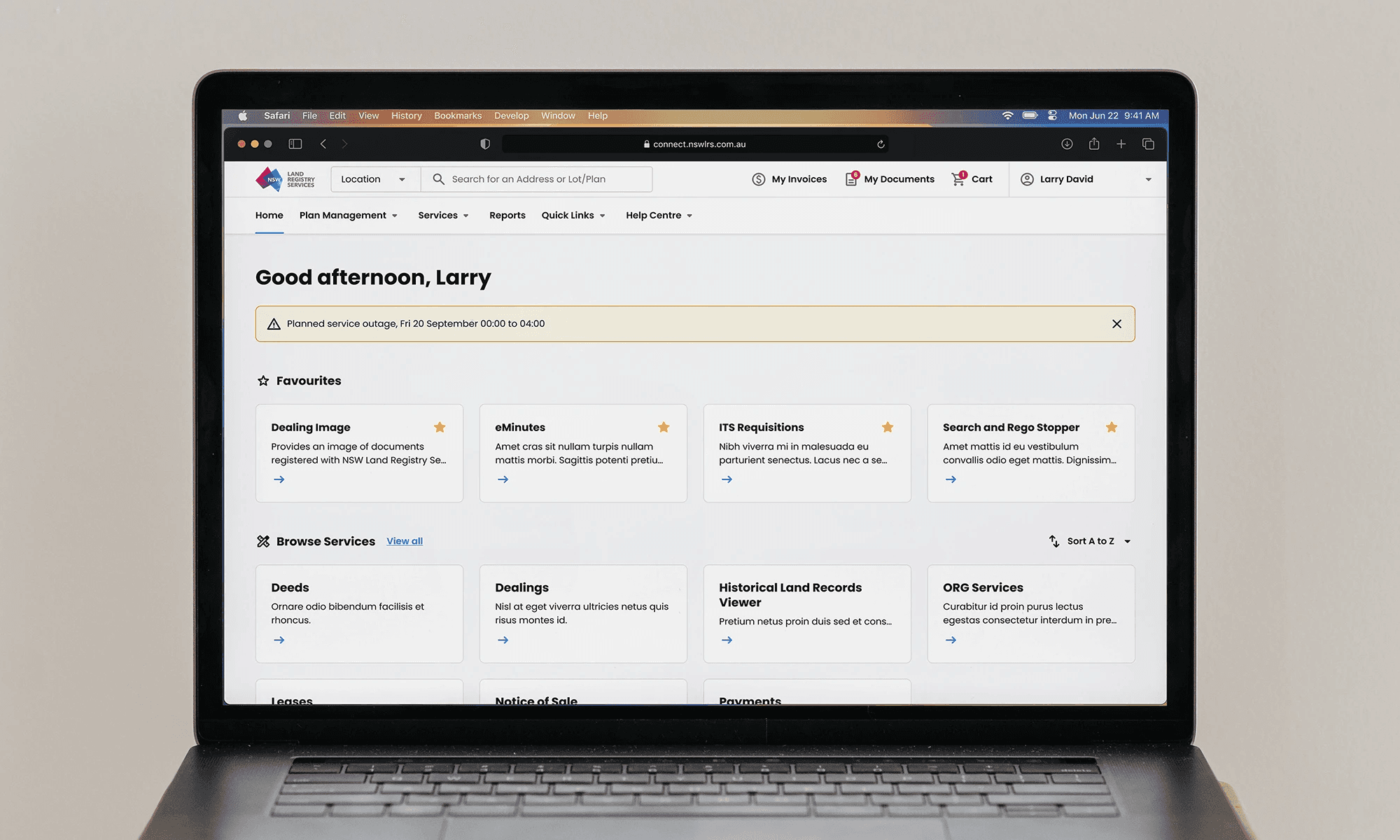
Property professionals in NSW were forced to work across two separate portals: the newer "Connect" and the legacy "NSW LRS Online." Each had its own design, its own login, its own way of doing things.
The user problem
Fragmentation created daily friction. Different interfaces meant complicated training for new staff. Complex regulatory terminology compounded the navigation problems. For time-sensitive tasks, the experience was trial and error. Trust in the platform eroded.
The business problem
Inconsistent design across two systems was damaging brand identity. The lack of unified structure made the platform difficult to manage and scale. Training costs were higher than necessary.
The goal
Create a single, cohesive digital environment that served multiple professional user groups without compromise. Not just merge two portals, but genuinely unify the experience.
My contribution
I owned the end-to-end user experience, from research strategy through final validated designs.
Led the card sorting study
Planned and facilitated research with 40+ participants to define the unified information architecture, then synthesised findings into a comprehensive report.
Guided design from wireframes to high-fidelity
Led the full design process in Figma and created detailed documentation for development handover
Ensured technical feasibility
Facilitated regular reviews with Solution Architect and Tech Lead to keep design decisions aligned with development capabilities.
Managed stakeholder communication
Served as primary UX point of contact, presenting progress and final designs to key business stakeholders.
Key insights
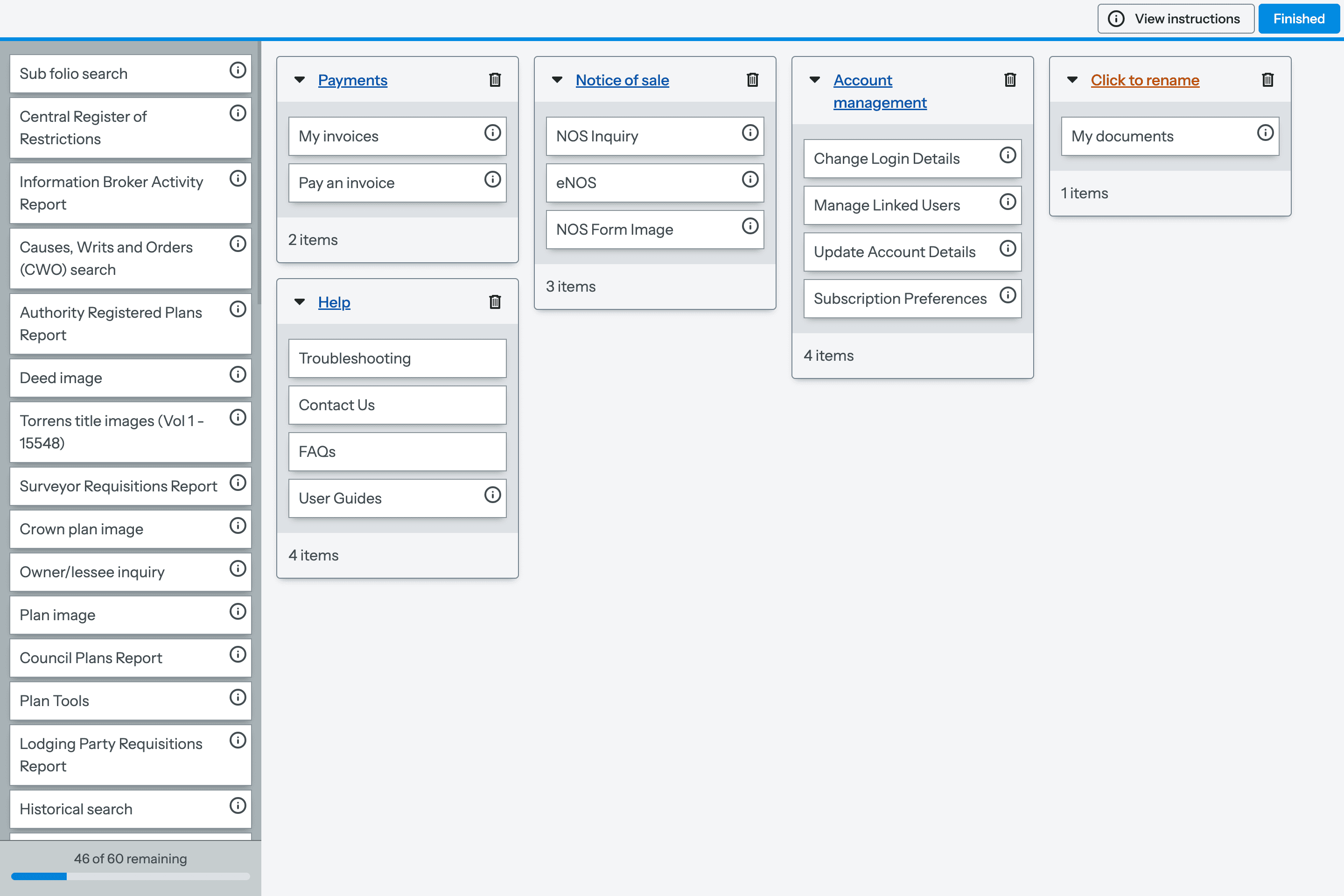
Users naturally group all services under a single umbrella
We initially launched an open card sorting study, but it was too time-consuming for participants and response rates suffered. I pivoted to a closed sort, formulating categories by combining early open-sort groupings with input from business subject matter experts.
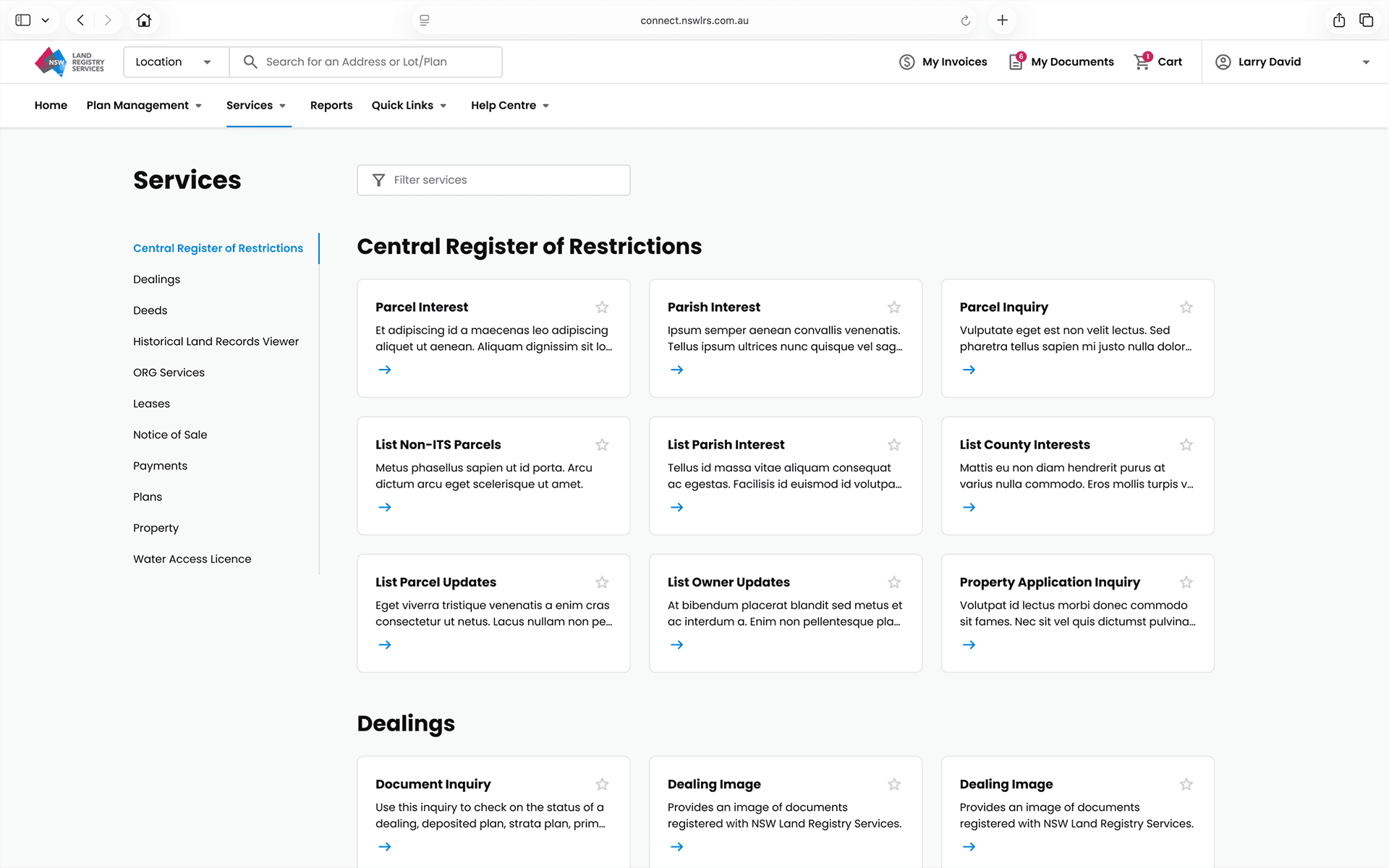
The result was clear: users naturally organised all the portal's disparate services under a single "Services" category, rather than scattering them across multiple top-level sections as the old portal did. This gave us a user-validated model for simplified navigation.
Research and design timelines overlapped out of necessity
Recruitment for the card sort was slow, pushing research into our design phase. We adapted by beginning wireframes that integrated functionality from both portals while research continued in parallel. This pragmatic approach kept the project moving without compromising on evidence-based decisions.
The solution
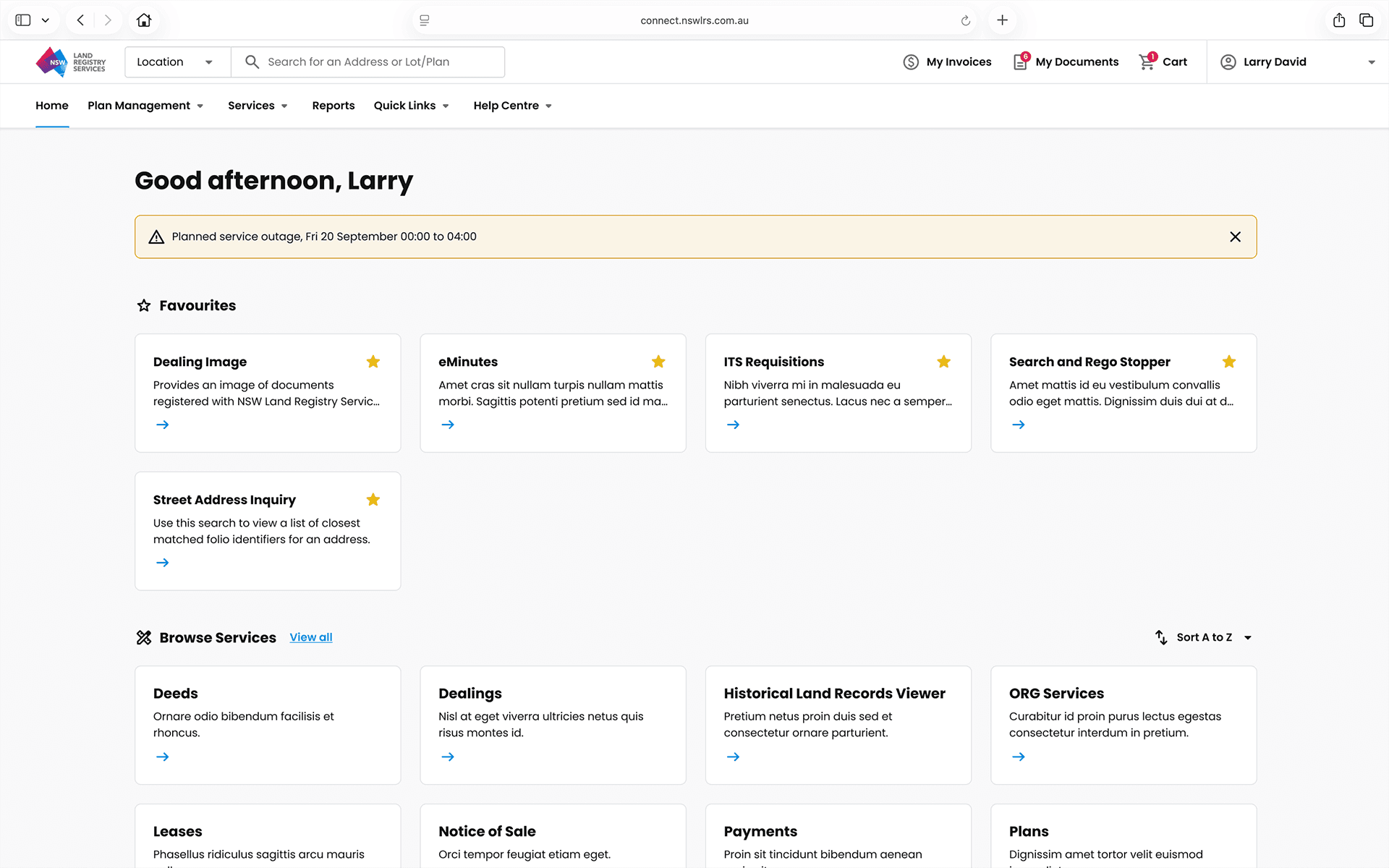
Customisable home screen with Favourites
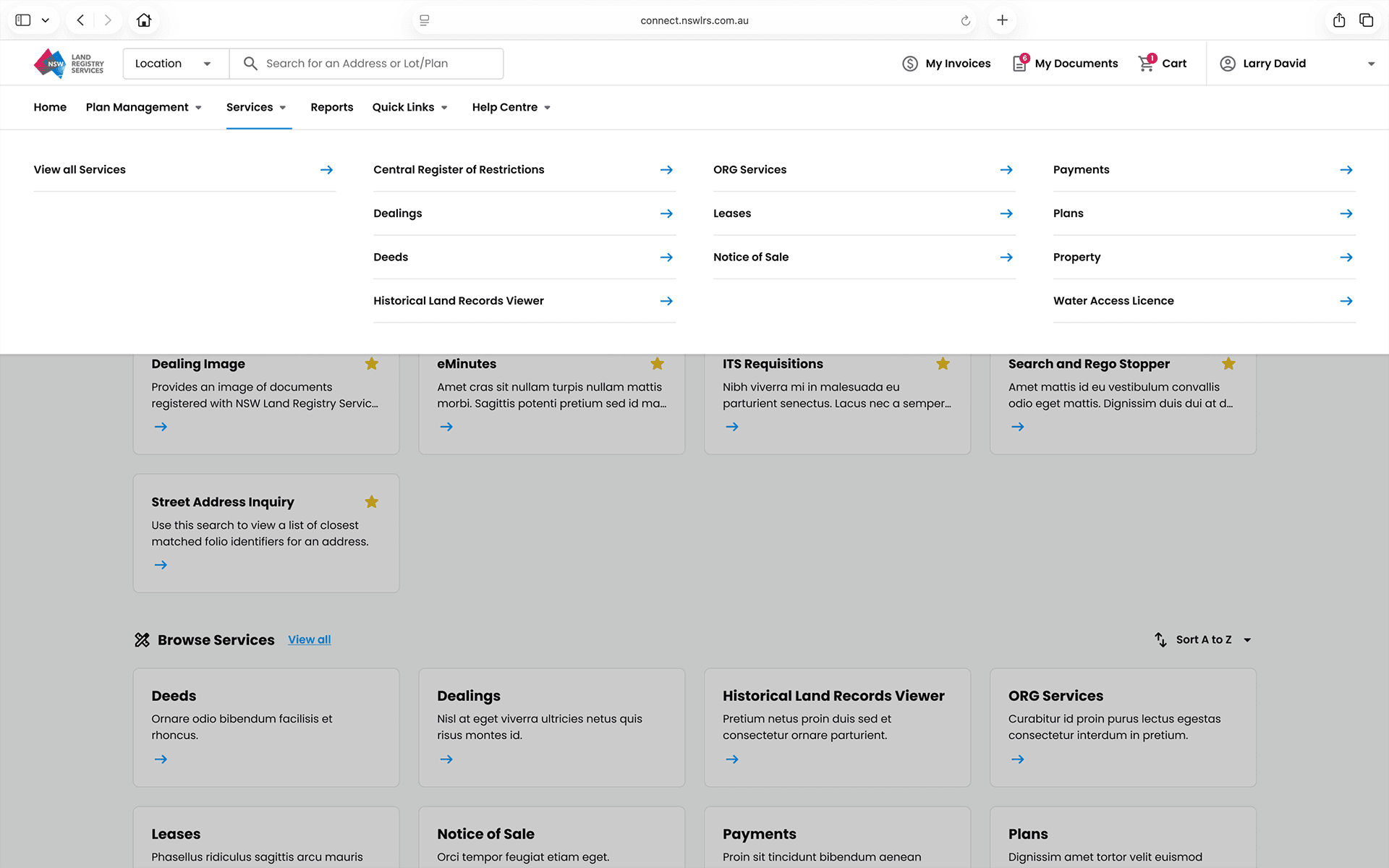
The new home screen works as a personalised launchpad. Users can pin frequently-used services to a Favourites section for immediate access. Expert users who perform the same tasks daily can now reach them in one click, dramatically reducing repetitive navigation.
Unified Services page
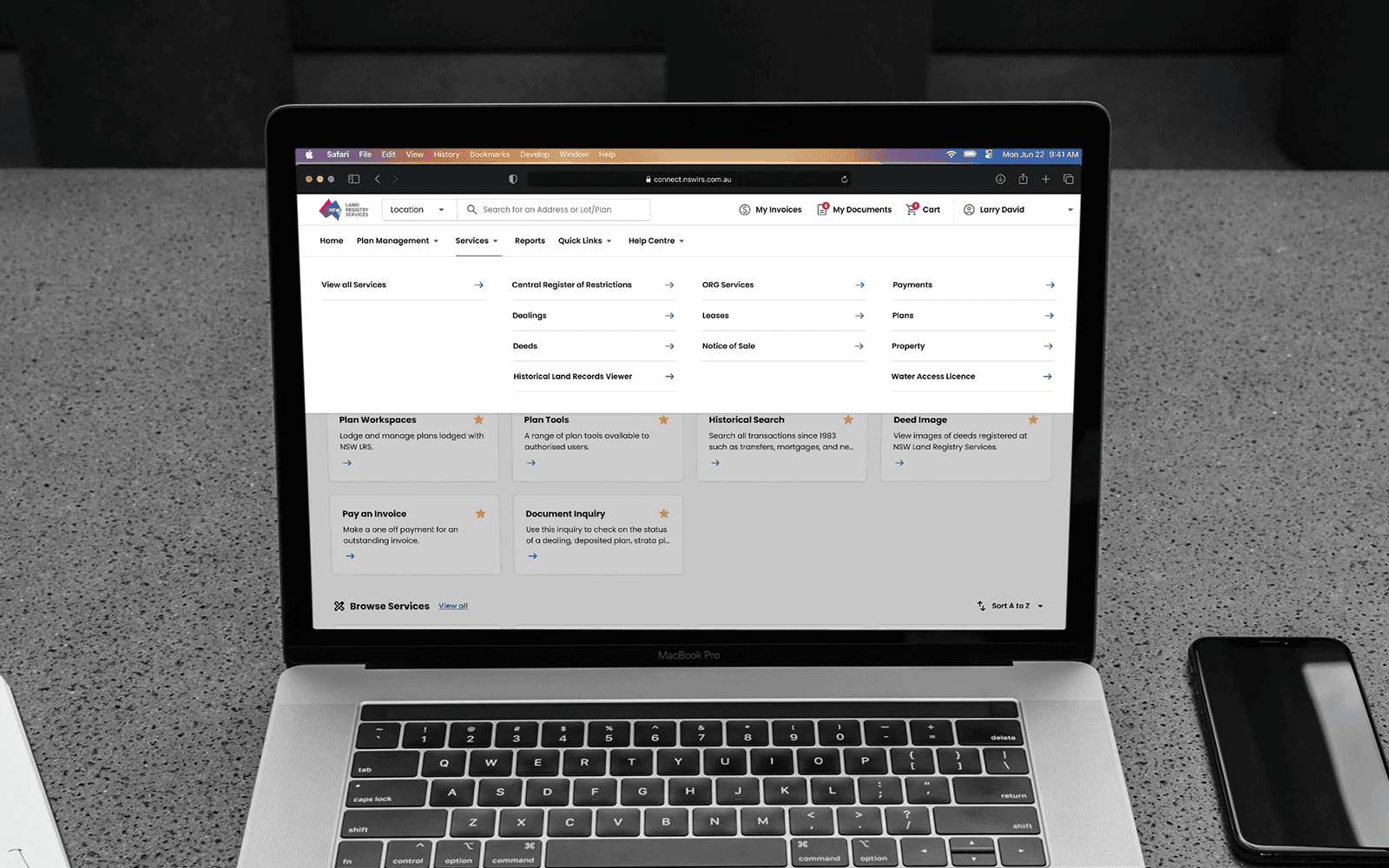
The core of the new navigation is a single Services page providing a complete directory in a clean card layout. The in-page navigation categories come directly from our card sorting study. Users find any tool from a single, predictable location using a structure that matches their mental model.
Top navigation with flyout menu
We moved the main navigation from a persistent left sidebar to a top-level system with flyout menus. This maximises horizontal screen space for the complex forms and multi-step processes that make up the actual services. The interface never feels cramped during the tasks that matter.
Results
The unified portal is in phased rollout through late 2025 to mid 2026, so post-launch metrics aren't available yet. Initial feedback from stakeholders and early users has been positive. The basic act of unifying two disparate systems into one coherent experience is already seen as a significant improvement.
Success will be measured through LRS's yearly customer survey. The previous survey identified many of the pain points this project directly addressed. The upcoming survey will close the feedback loop and validate decisions with a broad user base.
Megan Tucker
Program Manager @ NSW LRS
Reflection
Involve the technical team from day one
I'd engage developers in the earliest discovery workshops next time. Giving them foundational context for design decisions improves collaboration and efficiency throughout the project.
Start with hybrid card sorting
While our pivot from open to closed sorting was effective, a hybrid approach from the beginning would have captured user-generated categories while respecting participant time.
A design system should be next
We didn't have time within six weeks, but establishing a comprehensive design system would ensure the platform scales consistently as it evolves.
More work
Want to learn more about this project?
I'm looking for my next Senior UX or Product Design role.
Open to opportunities in Sydney, Copenhagen and Amsterdam.